Travel Scam Awareness: Digital Safety Checklist & Tips
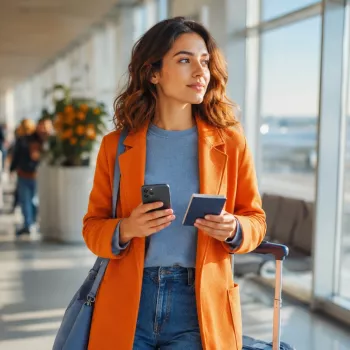
Travel Security & Scam Awareness Handbook: Practical Digital Safety for Tourists, Solo Travelers, and Business Trips
Travel risk often shows up as small “normal” moments: a helpful stranger offering directions, a public Wi‑Fi login page, a rushed taxi payment, a last-minute itinerary change, or an urgent message that looks like it came from a hotel or airline. A security-first routine—before departure, during transit, and after arrival—reduces the odds of financial loss, device compromise, and identity theft without turning travel into paranoia.
Know the most common scam patterns (and why they work)
Most scams succeed because they push you into speed, confusion, or embarrassment. The goal is simple: slow down and switch to verification.
- Pressure + urgency: “Last seat,” “police issue,” “card declined—try again,” “must pay a fee now.” Pause, verify, and switch channels.
- Authority + uniforms: imposters posing as transit staff, security, or hotel employees. Ask for ID and confirm with an official desk or phone number.
- Distraction + teamwork: one person engages while another grabs a bag or watches a PIN entry. Create distance and keep valuables in front pockets or a crossbody.
- Overhelpful offers: unsolicited assistance with ATMs, ticket machines, luggage, or “free” bracelets/flowers. Decline politely and move on.
- Too-good-to-be-true services: bargain tours, rentals, or rides that require deposits via unusual payment methods.
Fast response guide: situation → safest next step
| Situation | Common red flags | Safer response |
|---|---|---|
| Public Wi‑Fi asks for email/password | Captive portal looks branded; prompts for credentials | Use cellular/hotspot or VPN; never enter primary email password on Wi‑Fi portal |
| Taxi claims meter is broken | Fixed price demanded; route avoidance; cash-only | Use an official taxi stand/app; agree on price upfront or exit before luggage is loaded |
| ATM “helper” appears | Stands too close; offers to insert card; suggests multiple retries | Cancel transaction, cover keypad, use bank ATM indoors, leave and try later |
| Hotel/front desk texts for payment | Urgent tone; link to payment page; spelling errors | Call hotel via number from official website/booking confirmation; do not click links |
| Someone says police need to inspect your phone | Threats of fines; demands to unlock device | Ask for badge and station details; refuse unlocking; contact embassy/company security if needed |
Pre-trip digital hardening (30 minutes that prevents most incidents)
Do these before you leave—when you have time, stable internet, and access to account recovery options.
- Update your operating system, browser, and key apps; enable automatic updates.
- Turn on full-disk encryption, a strong device passcode, and biometric lock (with a passcode fallback).
- Enable multi-factor authentication on email, banking, and travel accounts; prefer authenticator apps or security keys over SMS when possible.
- Back up photos and important data; confirm restore works. Store a copy of critical documents offline (encrypted) and a printed emergency page.
- Set up “Find My”/device tracking, remote lock, and remote wipe; verify recovery email/phone are current.
- Use a password manager; replace reused passwords for airline/hotel/booking accounts.
- Create a travel-only email alias for bookings and loyalty programs to reduce phishing exposure.
For a fast, printable/phone-friendly checklist you can keep offline, use the Travel Security & Scam Awareness Guide (digital handbook).
Safe connectivity on the road: Wi‑Fi, hotspots, and Bluetooth
- Treat public Wi‑Fi as untrusted: avoid banking and sensitive logins unless using cellular or a trusted VPN.
- Disable auto-join Wi‑Fi and forget networks after use; scammers mimic hotel SSIDs.
- Prefer a personal hotspot for work tasks; keep the hotspot password strong and change it after the trip.
- Turn off Bluetooth and AirDrop/Nearby Share when not needed; set sharing to “Contacts only” or “Receiving off.”
- Use HTTPS-only mode in browsers where available; watch for certificate warnings and stop immediately if they appear.
- Avoid public USB charging ports; use a wall adapter and a data-blocking USB device/cable when charging in shared spaces.
Money safety: cards, cash, ATMs, and payment traps
Solo traveler routines that reduce risk without limiting freedom
Business travel: protecting company data in airports, hotels, and meetings
If something goes wrong: a calm incident checklist
A ready-to-use handbook for quick reference on the move
When you’re tired, rushed, or offline, a short checklist beats memory. The Travel Security & Scam Awareness Guide | Digital Safety Handbook for Tourists, Solo Travelers & Business Trips is designed for fast scanning before a flight, during transit, and at check-in, with practical steps for device protection, payment safety, and scam recognition.
Pair it with trip planning that’s lighter on waste and easier to stick to: Eco-Friendly Traveler Checklist | Sustainable Travel Digital Download.
Trusted travel safety resources
- U.S. Department of State — International Travel: Safety and Security
- CISA — Secure Our World: Use Strong Passwords and MFA
- Europol — Advice on common travel and payment scams
FAQ
Is a VPN enough to stay safe on public Wi‑Fi?
A VPN helps reduce eavesdropping risk, but it can’t stop phishing, fake login portals, malicious downloads, or someone stealing your device. Pair it with MFA, updated devices, and avoiding sensitive actions on unknown networks when possible.
What should be done immediately after a phone is stolen while traveling?
Start by remotely locking (and wiping if needed) the phone, then remove payment cards from your mobile wallet and change your primary email password. Revoke account sessions, contact your carrier to suspend service, and notify your bank or employer if the device was used for financial or work access.
How can travelers tell a real hotel or airline message from a scam?
Verify requests using official channels: call the number from the hotel/airline website or your booking confirmation, not the message itself. Avoid clicking payment links, check sender domains carefully, and confirm charges or “urgent issues” at the front desk or through official support.











Leave a comment